SagePause sleep notes
I Was Waking Up Soaked Four Nights A Week At 49. Then I Realized The Pajamas Were Part Of The Problem.
Written by SagePause·Updated ·Advertorial
$69 • 100% cotton • 30-night guarantee
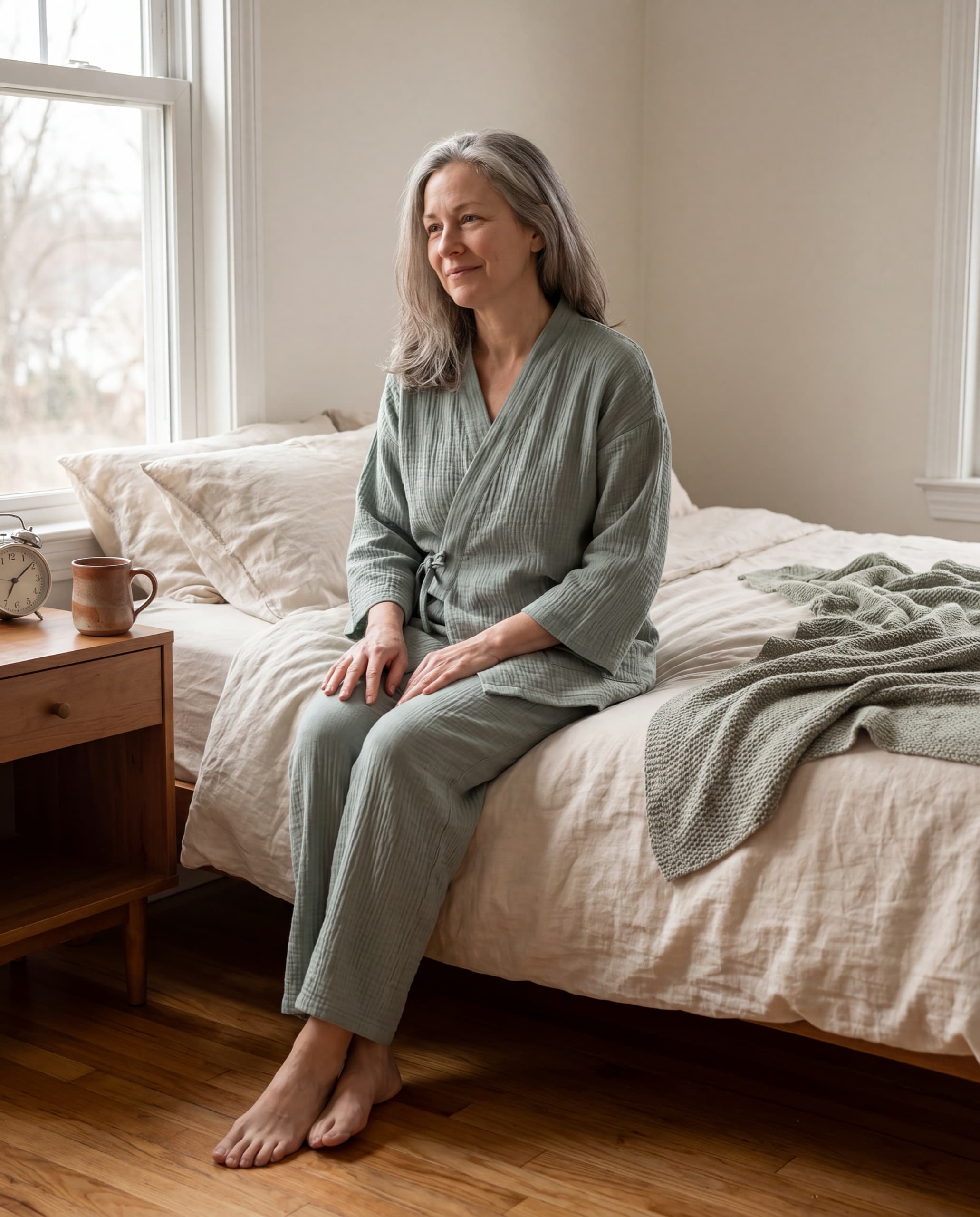
When the night turns
When we started building SagePause, the thing that kept showing up was not a neat before-and-after story.
It was a ritual.
Wake up soaked. Try not to wake the person next to you. Slide a towel under the damp spot. Change shirts in the dark. Lie there freezing and irritated, hoping sleep comes back before the next wave hits.
Maybe you know that version of the night.
You get into bed feeling fine. Sometimes even cold, because the AC is lower than anyone else in the room wants it. The blanket comes up. You tell yourself, "Tonight might be normal."
Then somewhere around 2:40, your eyes open before your brain is even awake.
Too hot.
Not warm. Not cozy. Hot in that panicked, trapped way where the fabric is stuck to your stomach, your chest feels damp, and rolling over only makes you more aware of your own skin.
Some nights you sit on the edge of the bed and peel your pajamas off like a wet layer.
Other nights you try to be quiet, slide a towel under yourself, flip the pillow, and hope you can fall back asleep before the next wave hits.
The worst part is how normal you learn to make it look.
Extra pajamas in the bathroom. Towels within reach. Sheets washed before anyone notices. A joke about being "hot-blooded" because saying the real thing out loud feels worse:
You are waking up soaked through to the mattress, and sleep is falling apart.
What you already tried
Cool when you get in. Damp by 2am.
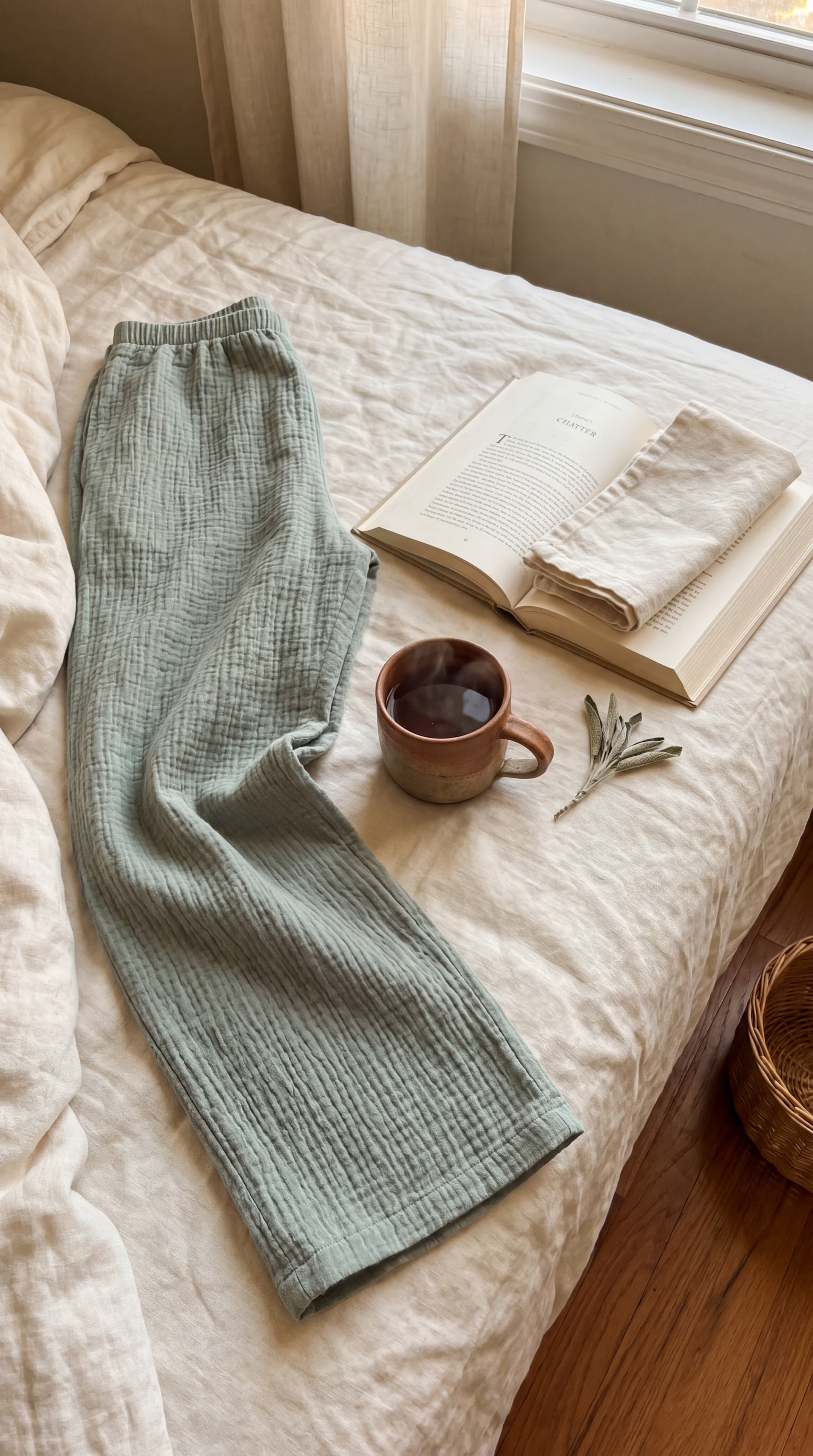
By then, you have usually tried what was supposed to help.
- The cooling pillowcase that felt cold for maybe fifteen minutes.
- The bamboo set everyone in a Facebook group swore by.
- The moisture-wicking sheets.
- The gel pillow.
- The tower fan pointed straight at you until your eyes felt dry.
- The AC so low your partner started sleeping with a sweatshirt on.
- The supplements that helped a little, but not enough.
- The towel trick, which was not a solution. It was a nightly surrender.
Every new thing gives you the same little burst of hope. Then the same 3am letdown.
Cool when you get into bed. Damp by the middle of the night.
Soft at first. Clingy later.
"Breathable" on the product page. A wet washcloth on your body by morning.
Maybe the breaking point is not dramatic. Maybe it is standing in the laundry room holding another damp pajama top and realizing you have started judging your nights by how many things need to be washed the next morning.
Sheets. Pajamas. Towels. Pillowcase.
That laundry-room pattern is what made us stop asking a better-marketed version of the same question.
Not: which fabric feels coldest in your hand?
The better question was: what would you actually want against your skin at 3am, when you are hot, damp, tired, and too irritated to fight with your clothes?
The fair question
Another cooling product?
If your first reaction is, "Another cooling pajama?" - good.
That was ours too.
Women in this stage have been sold satin, bamboo, ice-silk, cooling gel, temperature control, moisture-wicking, and every other polished promise. They do not need another product telling them their body is easy to solve.
They need someone to explain why the last six things made sense on the product page and still failed at 2am.
That explanation became the whole SagePause mechanism.
The mechanism
You're not the problem. The fabric is.
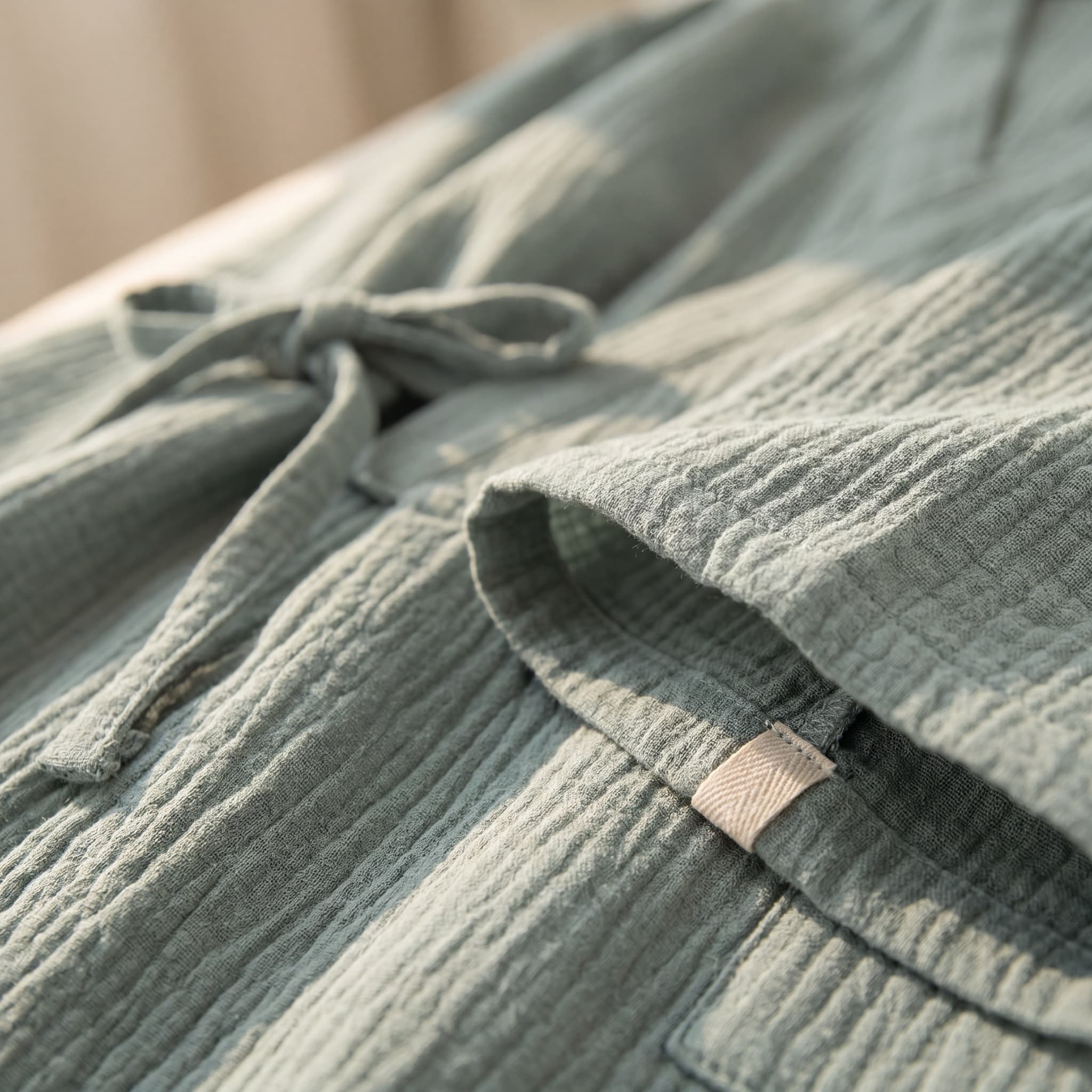
You've already tried what was supposed to work.
Bedsure. Cherrydew. Maybe Soma. The "moisture-wicking" sheets. The bamboo set someone recommended on Facebook. The gel pillow at $89. Each one felt cool when you slid into bed. By 2am, soaked again.
Here's what nobody told you.
Most "cooling" pajamas are designed to pass the touch test in a store. They feel cool when you press your hand to the fabric on the rack. That's the test the buyer sees before purchase. It's the test they're built to pass.
It's not the test you live with at 3am.
Your body makes heat all night. Quiet, constant, every minute you're under the covers. Cotton, satin, "ice silk," bamboo viscose - they absorb the heat at first, then hold it against your skin. The fabric felt cool when you got in. By 90 minutes, it's a wet washcloth wrapped around your body.
That's why you wake up at 2am again. Not because your body is broken. Because the pajamas were built for the rack, not for the night.
You didn't fail. The fabric did.
What we built
We built SagePause for the night, not the rack.
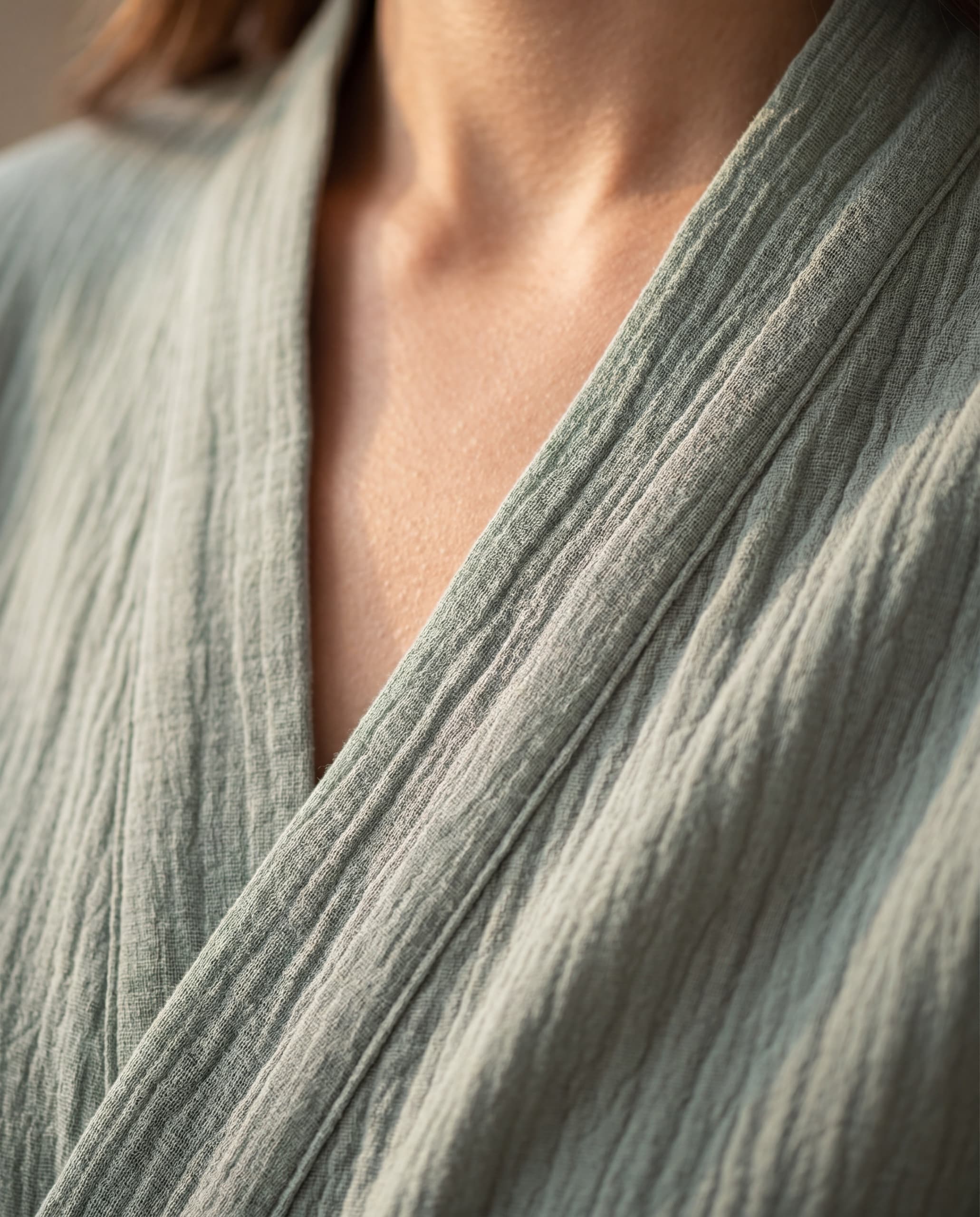
The whole design is about one thing: letting heat leave your body, not absorbing it.
That comes down to three things. None of them are fancy. All of them matter.
1. A kimono cut, not a fitted set. Most pajamas hug the body. That seals a layer of warm air against your skin - the sealed-bubble effect. SagePause is loose. The cut leaves room around you so air can move all night. Air carries heat away. Fitted fabric traps it.
2. 100% cotton - opaque, breathable, real. Not satin. Not "ice silk." Not polyester pretending to be silk. Cotton has been the breathable fabric for thousands of years for one reason: it lets air through and moves moisture instead of holding it. We chose a weight that stays opaque even in lighter colors - after reading every 1-star Amazon review on this.
3. No buttons. No fitted collar. No piping. These are the three places fabric bunches up and traps heat in pockets. Pull on. V-neck. Smooth seams. Nothing to wrestle with at 3am. Nothing to make a hot spot you can't escape.
The whole thing works like a linen napkin around a hot dish - air moves through, heat leaves the surface, nothing gets sealed in.
Built for the night. Not the rack.
A plain limit
Comfort, not a cure.
This is a pajama. It cannot fix your hormones. It cannot make every night quiet.
What it can do is stop being the part that works against you when the bed gets warm.
Loose cotton, an open neckline, no buttons, no collar, no piping - simple things, but they matter most when you are half-awake and already irritated by everything touching your skin.
30-night sleep guarantee
Sleep on it for a month.
For 30 nights, sleep in it. Wash it. Decide. If it doesn't feel right - too warm, too loose, too whatever - send it back. We refund you in full. No questions, no restocking fee.
- Sleep in it
- Wash it
- Return if it is not right
Customer pays return shipping. US orders only at launch.
Kimono set: $69. Standard US shipping is $7.99, free over $79. Ships in 14-21 business days from our overseas fulfillment partner.
$69 • 100% cotton • 30-night guarantee